Every Charlotte listing this fall shows an annual property tax figure. For a home closing between now and spring, that figure is based on an assessed value Mecklenburg County set as of 2023. The county is now finishing its next revaluation, which updates every parcel to market value as of Jan. 1, 2027. A buyer who budgets around the tax line on the listing is using a number that is about to be replaced.
The headline figure so far is a median residential increase of about 15%. What a specific $1 million-plus home will owe depends on how that home's value moved compared with the rest of the county and on the tax rates elected officials set once the new values are in place.
The tax line on a fall listing is a 2023 number
Mecklenburg County reassesses every four years. State law only requires it every eight. Ken Joyner, director of the county's Office of Tax Administration, said in the county's Sept. 2, 2026 release that the shorter cycle "keeps the property values closer to the market values, reducing the likelihood of large, unexpected increases."
Between revaluations, the assessed value mostly stays where it was set. North Carolina's G.S. 105-287 says that in a year without a general reappraisal, property "shall be listed at the value assigned when last appraised unless the value is changed in accordance with this section." The allowed reasons include correcting errors and physical changes to the land or buildings. The statute also lists what the assessor may not do:
"the assessor may not increase or decrease the appraised value of real property... to recognize a change in value caused by... Inflation, deflation, or other economic changes affecting the county in general"
So the market appreciation since 2023 hasn't shown up in assessed values yet. All of it arrives at once on the 2027 notice. The county says new values will be announced and notices mailed in early 2027. The bill based on those values follows later in the year.
What a Florida buyer should expect instead
Many households moving to Charlotte from Florida are used to a different system. The Florida Department of Revenue's Save Our Homes brochure explains that a homestead's annual assessment increase is capped at 3% or the change in CPI, whichever is less. After a change of ownership, the homestead loses that benefit and is reassessed at just value, meaning market value, the following Jan. 1, subject to statutory exceptions. In Florida, the purchase is the event that resets the tax base.
In Mecklenburg, the revaluation calendar resets it. A buyer closing in November moves into the seller's 2023-based value for now, and the January 2027 revaluation then updates it on the same schedule as every other parcel in the county.
Why the 15% median doesn't set your bill
The county's initial review covered 428,506 residential and commercial parcels. The median residential increase was about 15%, and the median commercial increase was about 30%. Appraisers reviewed about 56,000 qualified sales to reach those figures and plan to review every neighborhood again before values are final. WFAE reported on Sept. 4 that county officials stressed these increases do not automatically mean similar tax increases, because tax rates are set separately from assessed values.
In a revaluation year, G.S. 159-11(e) requires the budget officer to include a revenue-neutral property tax rate in the budget for comparison. When values rise across the county, that rate comes down. Under it, a home whose value rose less than average carries a smaller share of the total, and a home that rose more carries a larger share.
The 2023 revaluation showed how this plays out. WFAE reported in February 2023 a median home value increase of 59%. It quoted the assessor saying the highest-valued properties rose less than homes in the middle and lower thirds: top-third homes rose nearly 50% on average, while bottom-third homes nearly doubled. Using preliminary data and a revenue-neutral rate, WFAE showed a $140,000 home paying about $278 more, compared with about $177 more for a home valued around $420,000. The higher-value home had a larger tax base and still paid a smaller increase, because its value had moved less compared with the rest of the county.
The revenue-neutral rate is only a benchmark, and the adopted rate can be higher. After 2023, the county and city made different choices:
Rate per $100 of assessed value | Mecklenburg County | City of Charlotte |
|---|---|---|
FY2023, before the 2023 revaluation | Not listed here | 34.81 cents |
FY2024 revenue-neutral rate | 45.71 cents | 26.04 cents |
FY2024 adopted rate | 47.31 cents | 26.04 cents |
FY2027 adopted rate, in effect now | 49.27 cents | 29.30 cents |
In 2023 the county adopted a rate above revenue-neutral, and the city adopted exactly the revenue-neutral rate. For the current fiscal year, the Charlotte Observer reported that the county kept its rate at 49.27 cents and the City Council raised the city rate by 1.89 cents, from 27.41 to 29.30 cents. The City of Charlotte's own announcement confirms the 1.89-cent increase. Both rates will be set again after the 2027 values are known.
What September's market says about values at the top
The county's Sept. 1 presentation to commissioners included a slide titled "Median Increase in Residential Property Values by Price Range." The county's public release and the local coverage that followed, including QCity Metro's Oct. 9 report, give only the countywide medians. Until values are published, nobody can say whether $1 million-plus homes will land above or below 15%.
The current market shows how the upper price bands are behaving. In Mecklenburg County in September 2026, inventory rose 12.6% from a year earlier to 4,622 homes, supply reached 3.7 months, days on market rose to 51, and sellers received 95.5% of original list price. The median price held at $450,000. Across the Charlotte region in September 2026, homes priced above $500,000 received 96.4% of original asking price, compared with 95.4% for all price ranges, and averaged 54 days on market compared with 55 overall. Single-family closings above $700,000 rose 7.3% over the 12 months through September 2026, to 6,614.
These are regional price bands, not a measure of $1 million-plus homes specifically. They show upper-tier homes holding slightly firmer than the overall market at a time when supply is rising. For a buyer, the 2027 notice is likely to reflect how a particular home and its neighborhood moved, not how the county moved on average.
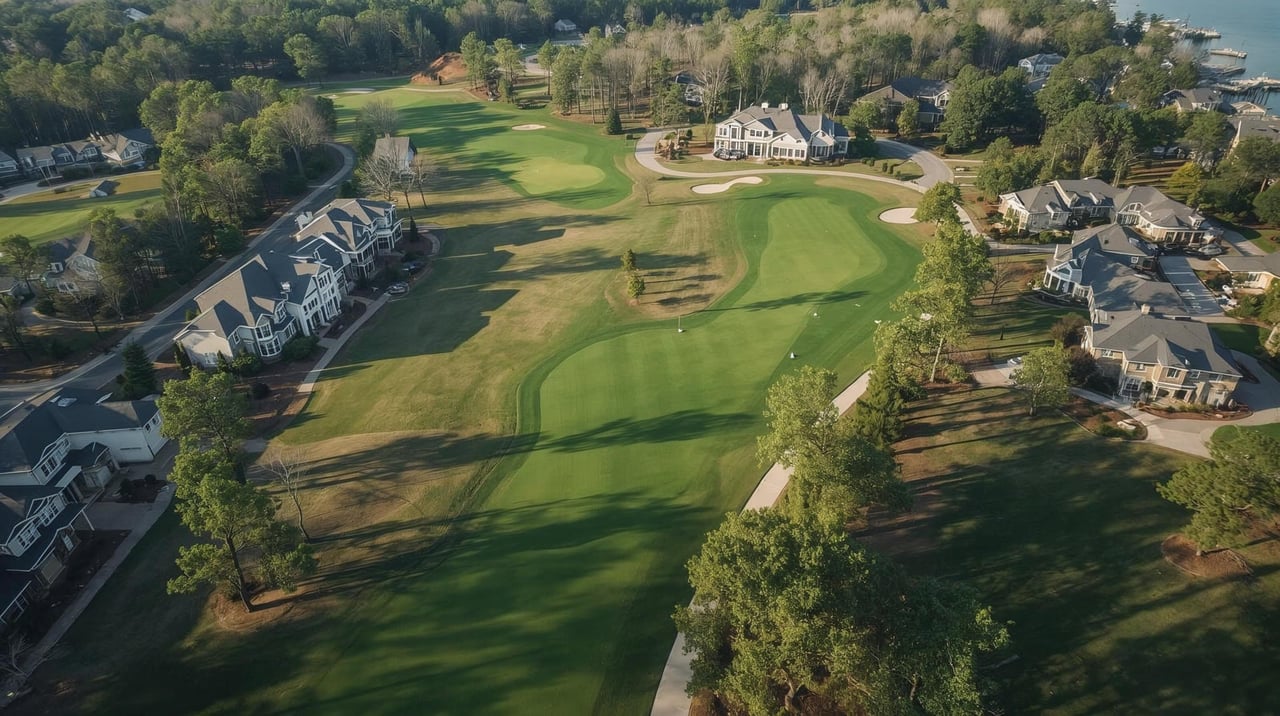
Golf-community buyers may also notice one detail in the deck. For 2027 the county hired CBRE's valuation group, a golf course valuation specialist, to appraise a sample of Mecklenburg golf courses and advise on the method used for the rest. The deck describes this as a lesson from the 2023 revaluation. That work covers the courses themselves, not the homes around them.
The record card, the notice, and the 30-day window
Before values are final, the Office of Tax Administration encourages owners to check their property record card at Reval.MeckNC.gov and submit corrections. The county's example is a home with two bathrooms that the record lists as having three, an error that could produce a higher value. For a buyer under contract, the record card for the home they are purchasing is public and quick to compare against the inspection report and the listing details.
After the notices go out, the county's revaluation page says an informal review should be requested within 30 days of the notice date. A formal appeal can then go to the Board of Equalization and Review. The appeals page says revaluation-year appeals cannot be filed until notices are mailed, and that the owner carries the burden of showing the assessed value substantially exceeds fair market value. The 2027 deadline for the Board of Equalization and Review has not been posted yet. The May 4, 2026 date currently on that page is from the prior cycle.
This article is general information, not legal, tax, or financial advice. Anyone weighing a purchase or an appeal should confirm the details of their own situation with a qualified tax professional or attorney.
A few distinct questions
Does buying a home this fall trigger a new assessment? Under G.S. 105-287, general economic changes cannot move an assessed value between reappraisals. The changes the statute does allow are tied to errors, physical changes, permitted use, and similar specific reasons. The countywide reset comes with the Jan. 1, 2027 revaluation.
Is the 15% figure final? No. It reflects the initial review, and assessment staff are doing more property reviews through the rest of 2026 before final values are posted.
Has the county approved how values will be calculated? Yes. QCity Metro reported that the Board of County Commissioners approved the 2027 Schedule of Values, the appraisal manual used for the revaluation, on Oct. 6.
If you're comparing Charlotte homes this season, we can help you read each property's tax line in context: its record card, its neighborhood's recent sales, and the revaluation calendar ahead. Tim and Sarah Caudill at Carolina Estate Properties are glad to go through those numbers with you before you make an offer. Let's Connect.